“Kings Can Do Anything”: How Ukrainian Children’s Cinema Was Created in Crimea
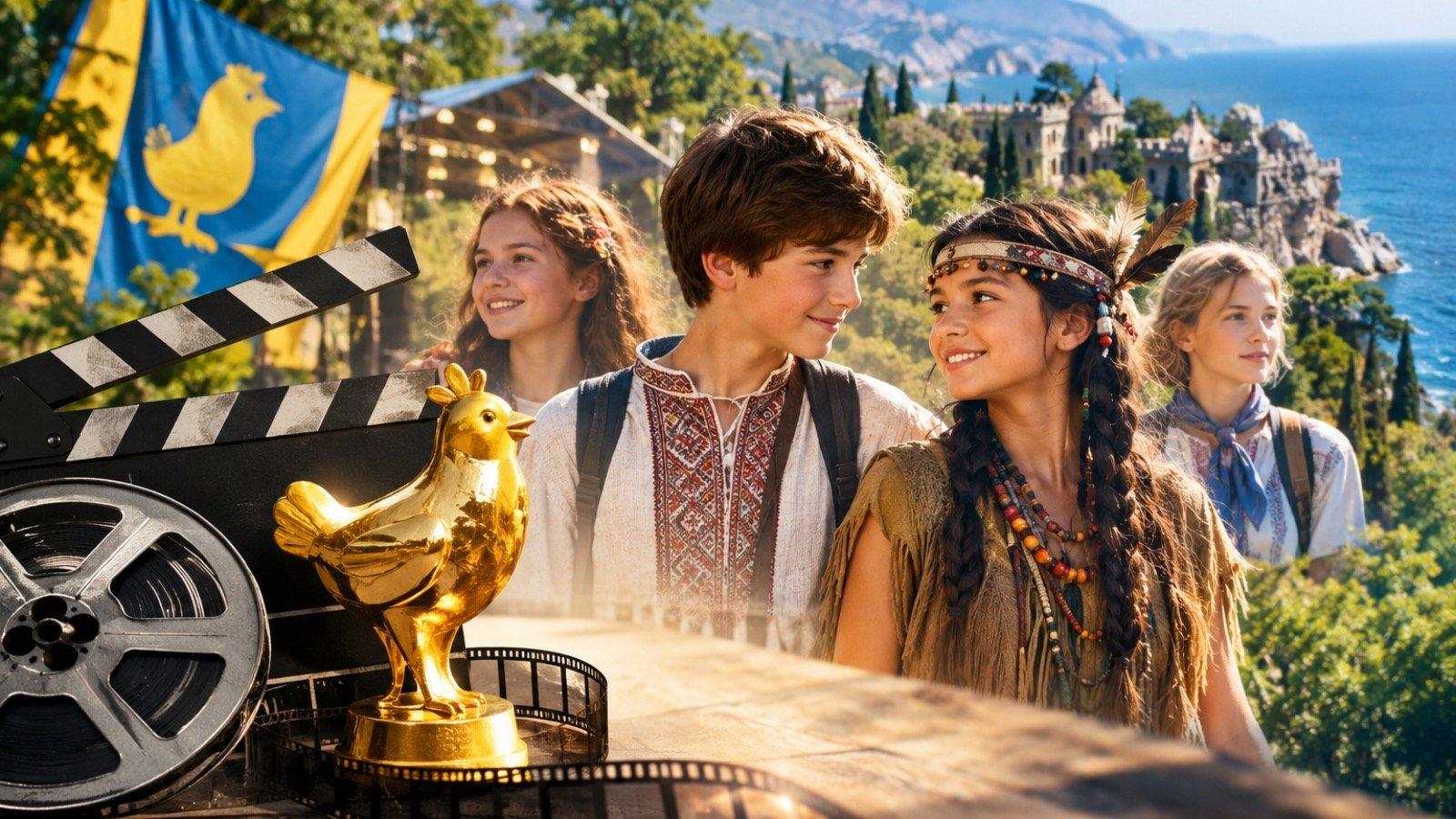
Ілюстративне зображення згенеровано ШІ


Fifteen years ago, a festival held in Crimea demonstrated the ability of the peninsula’s Ukrainian cultural community to produce its own audiovisual content for children and young people. In September 2011, the television film Kings Can Do Anything, created by Crimean artists, won the top award at the 15th anniversary All-Ukrainian Festival of Films, Television and Radio Programmes for Children and Youth, Golden Chick.
Behind this achievement lay not only the story of a successful film project, but also the years of work by people who developed the Ukrainian language, theatre, and children’s creative arts in Crimea.
Golden Chick: Ukrainian Cultural Space in Crimea
From 16 to 19 September 2011, marking the 20th anniversary of Ukraine’s independence, the 15th anniversary edition of the All-Ukrainian Golden Chick Festival was held at the Ministry of Defence of Ukraine’s club in Alupka. Founded in the early 1990s, the festival’s presence in Crimea demonstrated that the peninsula’s cultural life remained part of Ukraine’s broader national cultural landscape and that local creative teams could contribute to the development of Ukrainian cultural production.
The festival was organised by the State Committee for Television and Radio Broadcasting of Ukraine, the Verkhovna Rada of the Autonomous Republic of Crimea, the Ministry of Culture of the Autonomous Republic of Crimea, the Ukrainian branch “Slavutych” of the International Foundation for the Development of Cinema and Television for Children and Youth, and the Alupka City Council.
Around 50 participants took part in the event. Its principal objectives were to identify the best national audiovisual productions for children and young people, support young talent, and foster cooperation among professionals working in children’s cinema, television, and radio broadcasting.
The competition covered a wide range of genres and formats, including feature films and television films for children and young people, animation, children’s and youth television programmes, radio productions, programmes about folk traditions and customs, and content promoting a healthy lifestyle. Awards were also presented to authors, directors, television presenters, and performers in children’s and youth productions.
The entries were evaluated by a jury chaired by Leonid Muzhuk, People’s Artist of Ukraine, film director, and recipient of the Taras Shevchenko National Prize of Ukraine. The jury included representatives of Crimean media and local government, as well as staff from state television, radio broadcasting, and film institutions in mainland Ukraine.
The festival extended beyond the competition screenings. Its programme included meetings with cultural and artistic figures, press conferences on current issues in culture and children’s cinema, and master classes for participants. Teachers and students from the republican boarding school in Alupka also took part in the master classes.
On 18 September, the festival’s closing ceremony took place at the Vorontsov Palace, where the winners were announced. Among those recognised was Elina Sukach, now known as Khodakivska. She turned 11 on the day of the ceremony and received an award in the category of Best Supporting Performer in a Children’s and Youth Production.
However, the most significant achievement for the Crimean team was the recognition of Kings Can Do Anything as the best national film production for children and young people in 2011.
Kings Can Do Anything: Ukrainian as the Language of Adventure and Friendship
The adventure television film Kings Can Do Anything was produced through a collaboration between the State Television and Radio Broadcasting Company “Crimea” and the Svitanok studio. Its writer and director was Oleksandr Polchenko, an editor of Ukrainian-language programmes at the Crimean broadcaster. His wife, Alla Petrova, head of the Svitanok studio, served as production director. Volodymyr Kravchenko was the cinematographer, and Viktoriia Bohatyriova was the editor.
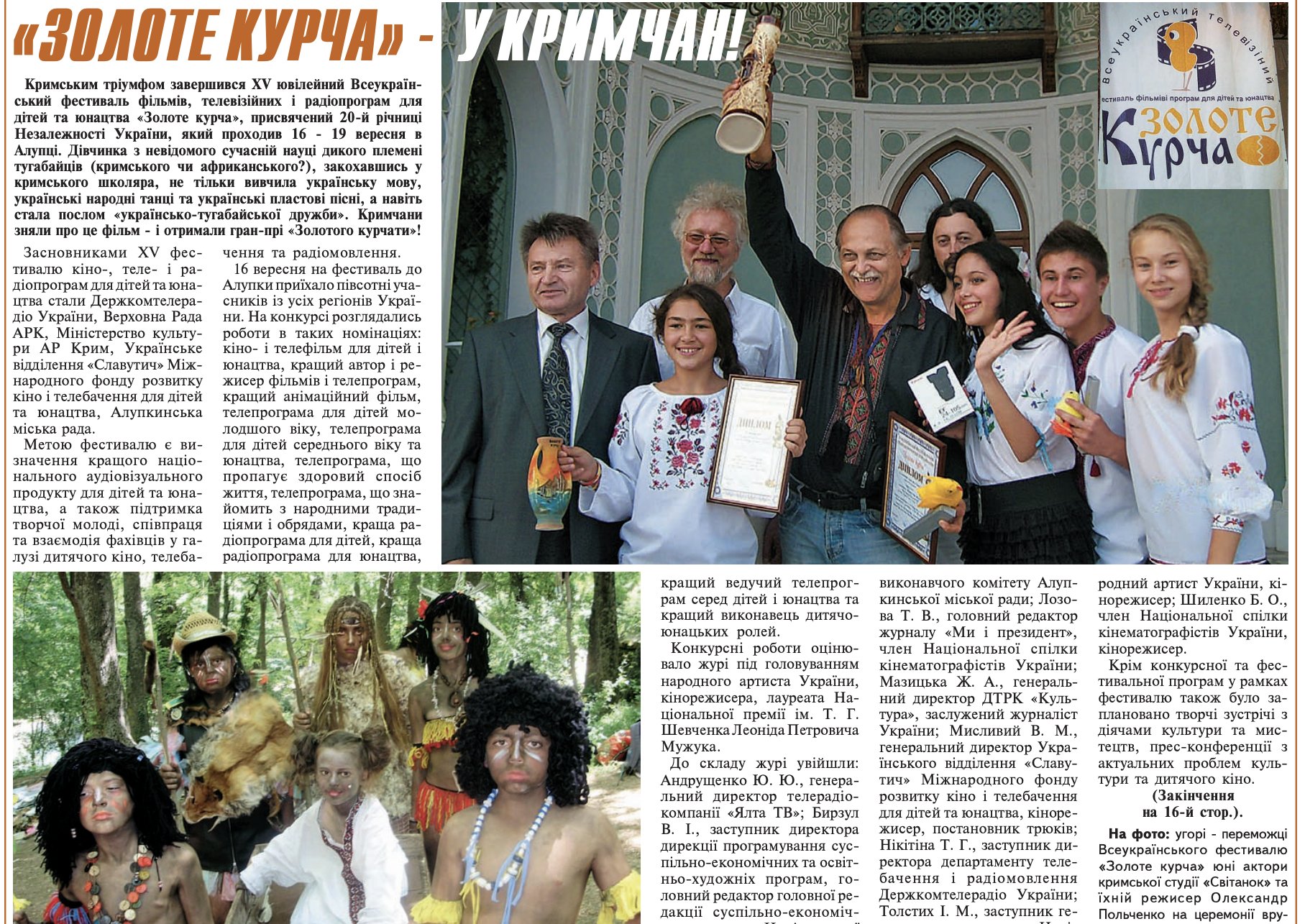
The story centres on Tolko, a Crimean schoolboy played by Oleksandr Polinovskyi, now an actor at the Volyn Academic Regional Puppet Theatre, and Kuha Meka, a young member of the fictional Tugabai tribe, portrayed by Elina Sukach. The girl falls in love with the Ukrainian boy, learns Ukrainian, masters Ukrainian folk dances and Plast scouting songs, and eventually becomes a kind of ambassador of Ukrainian–Tugabai friendship. The other leading roles were played by Zoia Mansurova, now an actress in Russian theatre and cinema, and Kateryna Kravchenko.
The film’s adventure narrative combined entertainment with themes of intercultural communication, mutual understanding, and openness to other cultures. Ukrainian was not merely a formal element of the production; it was an integral part of the story through which the characters met, developed, and built relationships.
This aspect takes on particular significance when the place and time of the film’s production are considered. In Crimea, where the Ukrainian language and culture required sustained support, the appearance of an original Ukrainian-language television film for children was the result of the purposeful efforts of creative teams. It was not simply a matter of producing television content. It was also an opportunity to show children that Ukrainian could be the language of a contemporary adventure story, humour, friendship, and artistic expression.
The festival’s top award confirmed that the Crimean team had created a work that met high professional standards and earned recognition across Ukraine. The achievement mattered not only to the filmmakers and performers, but also to the Ukrainian cultural community of the peninsula as a whole.
Svitanok: A Centre for Ukrainian Children’s Creativity
The story of Kings Can Do Anything is inseparable from the exemplary Svitanok theatre studio, which operated in Simferopol at the Crimean Republican Centre for Children’s and Youth Creativity. It was founded in 1993 by Oleksandr Polchenko and Alla Petrova, a married couple active in Crimea’s Ukrainian community.
Over the years, the studio became one of the peninsula’s notable centres of Ukrainian-language children’s creativity. Its students staged productions based on both Ukrainian classics and contemporary works, performed in other Ukrainian cities, and repeatedly won awards. Taking part in theatrical productions gave children the opportunity not only to develop their acting skills, but also to practise Ukrainian, discover national literature, and experience a sense of belonging to Ukraine’s cultural community.
Importantly, under Alla Petrova’s leadership, Svitanok was much more than an extracurricular theatre club. Children from different ethnic backgrounds attended the studio, brought there by parents who consciously chose a Ukrainian-speaking environment for them. Through theatre, Ukrainian became a language of everyday communication, creativity, and interaction, while Ukrainian culture became a lived experience rather than merely a subject to study.
This was the studio’s distinctive contribution. Through its direct work with children and young people, it helped sustain Ukrainian cultural life in Crimea. Such communities are essential to passing language and cultural memory from one generation to the next, nurturing new creative talent, and maintaining a region’s connections with the wider Ukrainian cultural landscape.
However, Russia’s occupation of Crimea fundamentally changed the conditions under which this work could continue. The studio’s leaders came under pressure, and attempts were made to force Svitanok to abandon its Ukrainian-language activities. After 2015, the studio faced inspections, and its founders were eventually forced to discontinue the work of a collective that had nurtured hundreds of children over more than two decades.
This history demonstrates that Russia’s occupation meant more than a change in political control over the peninsula. It also led to the destruction of Ukrainian cultural communities, the displacement of Ukrainian from public life, and restrictions on opportunities for children to acquire and use the language naturally. The closure of Svitanok was not simply the loss of a single creative studio; it was the loss of a community that had spent years sustaining Ukrainian cultural life in Crimea.
Preserving Cultural Heritage as the Foundation for Cultural Return
Today, the history of the Golden Chick Festival and the television film Kings Can Do Anything carries a meaning far beyond that of a successful cultural event in 2011. It recalls a time when creative groups operated in Crimea, Ukrainian-language culture for children was developing, original audiovisual productions were being made, and professional links with mainland Ukraine were being maintained.
The Crimean film’s victory at an all-Ukrainian festival confirmed that the peninsula’s Ukrainian cultural environment possessed its own creative potential and capacity for independent development. This achievement did not happen by chance. It was the result of years of work by artists, educators, organisers, and parents who created opportunities for children to learn Ukrainian, develop their abilities, and engage with national culture.
The experience of Svitanok illustrates particularly clearly why everyday cultural work matters. National identity is sustained not only through government decisions or official events. It is also formed in theatre studios, schools, and creative groups, through the shared efforts of children and adults who pass language, cultural traditions, and a sense of belonging to their country on to the next generation.
For this reason, preserving and researching the history of Ukrainian culture in Crimea should be part of a broader effort to document the consequences of Russia’s occupation and consider the peninsula’s future within Ukraine. The stories of individuals, creative groups, and cultural projects help reconstruct the history of Ukrainian life in Crimea, demonstrate its diversity, and challenge the notion that Ukrainian culture is somehow alien to the region.
Kings Can Do Anything is more than the title of a television film that won the top award at a children’s film festival. It is also a reminder of the creative potential of Ukrainian Crimea and the people who developed its cultural life. Their experience shows that Ukrainian culture on the peninsula had its own traditions, institutions, and generations of young people shaped by them. This heritage must be preserved, restored to Ukraine’s information and cultural space, and made part of the shared national memory of Crimea.
Anton Bozhuk, researcher of the history of Ukrainians in Crimea
We also recommend reading alongside this article: “Yalta: The Struggle to Preserve the Lesia Ukrainka Museum and Ukrainian Cultural Centres”.
 1715 views